

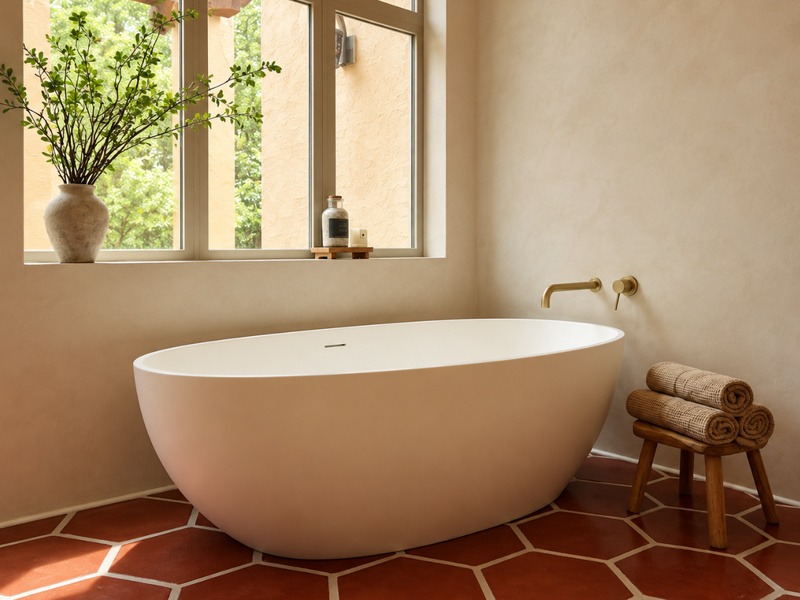
When designing a bathroom, kitchen, or other high-impact interior space, microcement and traditional tile offer two very different aesthetics, and increasingly, designers are finding ways to use both.
Tile remains an enduring material in interior design, offering nearly limitless choices in color, pattern, shape, and scale. Microcement plaster, meanwhile, brings something entirely different to a space: a seamless, hand-applied surface with subtle movement, natural variation, and a distinctly modern architectural quality.
For designers and homeowners drawn to continuous surfaces and understated texture, Meoded Concretta FS Microcement Plaster offers a sophisticated alternative – or complement – to traditional tile. Its exceptional adhesion, extensive color palette, and ability to be applied over many existing surfaces also make Concretta FS an especially compelling finish for renovations.
When comparing microcement vs. tile for bathrooms, kitchens, and showers, the main differences include appearance, installation, maintenance, design flexibility, and cost. The table below highlights the key advantages and considerations of each finish.
| Feature | Microcement | Traditional Tile |
|---|---|---|
| Appearance | Seamless, continuous look | Individual tiles and grout lines |
| Texture | Hand-troweled, organic movement | Smooth, textured, or patterned |
| Installation | Skilled specialty application | Tile-setting and grouting |
| Over existing tile | Possible with a suitable system | Depends on substrate and installation |
| Showers | Requires an appropriate waterproofing system | Also requires appropriate waterproofing |
| Maintenance | Cleaning and sealer upkeep | Tile and grout maintenance |
| Design flexibility | Continuous surfaces, custom colors | Extensive shapes, sizes, patterns |
| Cost | Depends on preparation and specialist labor | Depends on tile and installation costs |
For homeowners and designers seeking a seamless alternative to traditional tile, Meoded Concretta FS Microcement Plaster offers a hand-applied decorative finish that can also be installed over suitable existing tile, subject to proper surface evaluation and installation requirements.
Microcement is a thin, trowel-applied cementitious decorative finish designed to create continuous surfaces with the appearance and movement of concrete, but without the visual interruption of traditional tile layouts.
Unlike tile, which creates its design through individual pieces and grout lines, microcement creates a more monolithic appearance. The artisan’s application becomes part of the finished aesthetic, producing subtle tonal movement and texture that can range from quiet and refined to more expressive and organic.
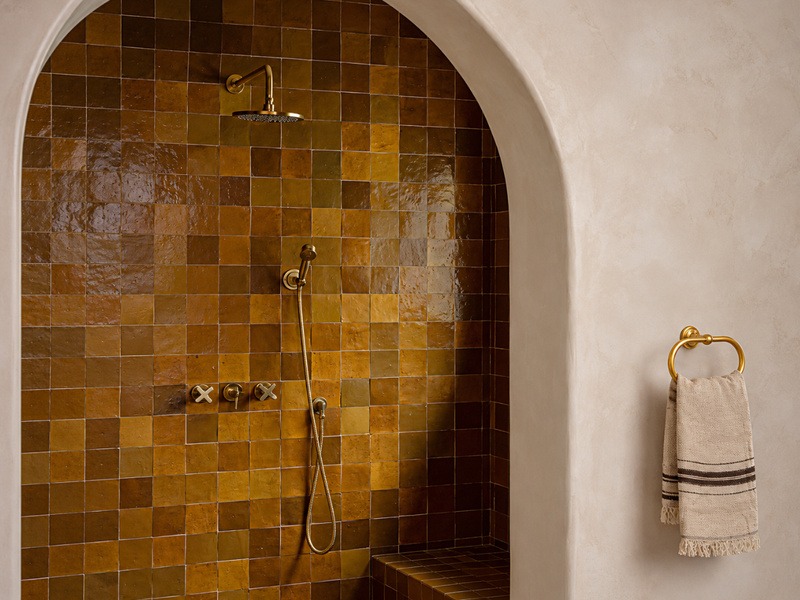
Meoded Concretta FS is a premium microcement plaster formulated for exceptional adhesion and versatility. It can be used to transform walls, floors, showers, backsplashes, countertops, and other properly prepared surfaces into cohesive architectural features.
The result is not simply a substitute for tile. It is an entirely different design language.
Learn more about Meoded Microcement Plaster, including its applications, finishes, and design possibilities for modern interiors.
The decision between microcement vs. tile often comes down to the visual experience a designer wants to create.
Tile introduces pattern, repetition, geometry, and defined lines. Depending on the selection, it can become a bold focal point or a subtle background material.
Microcement emphasizes continuity.
With fewer visual interruptions, a microcement surface can allow walls, floors, countertops, and architectural details to be read as part of one larger composition. This makes it particularly well suited to contemporary, Mediterranean, organic modern, minimalist, and modern European interiors.
Concretta FS also carries the individuality of a hand-applied artisan finish. Variations in movement and texture are part of its character, giving the surface dimension that cannot be replicated by conventional paint or manufactured tile.
While fewer grout lines can simplify certain aspects of cleaning, both microcement and tile require proper care to maintain their appearance and performance over time. When professionally installed, correctly sealed, and maintained according to recommendations, microcement offers a durable, practical, and visually appealing surface suitable for a variety of applications.
Beyond its maintenance benefits, microcement stands out for its seamless aesthetic, design versatility, and distinctive hand-applied finish, creating continuous surfaces that are both functional and architecturally refined.
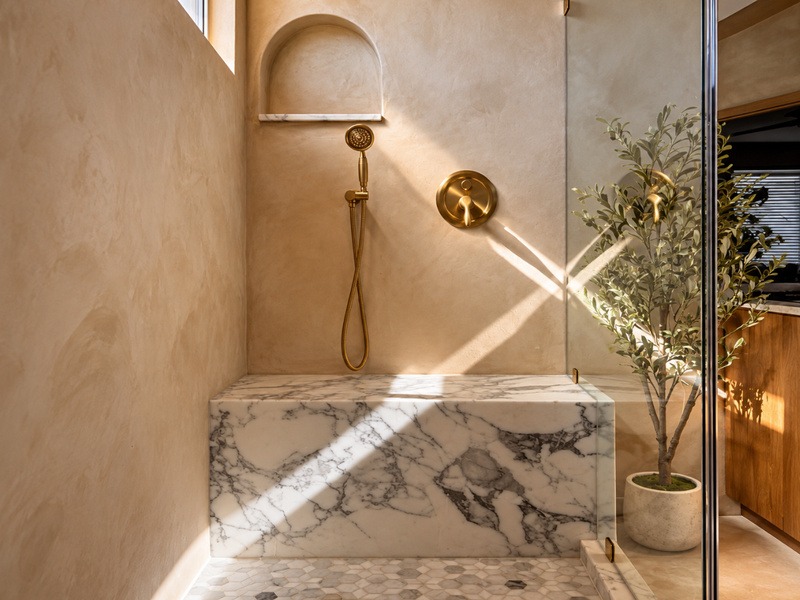
One of the most beautiful ways to approach the microcement vs. tile conversation is not to choose between them at all.
Designers can combine microcement and tile within the same room to create contrast between texture, pattern, and scale.
In a bathroom, for example, handcrafted or patterned tile can become an intentional focal point while Concretta FS creates a quieter, continuous backdrop on surrounding walls. A tiled shower floor might be paired with microcement walls, or statement tile can define a niche while microcement provides visual continuity throughout the remainder of the space.
In kitchens, a beautiful stone or ceramic tile backsplash can sit alongside a microcement island, range hood, walls, or countertops. Conversely, Concretta FS can transform a backsplash into a subtle, seamless surface while tile remains elsewhere in the room.
The combination can be particularly effective because the materials offer different visual qualities. Tile brings rhythm and pattern; microcement brings movement and continuity.
Rather than competing, the two can make each other more interesting.
One of the most compelling advantages of Concretta FS Microcement Plaster is its potential for renovation.
Removing existing tile can turn what appears to be a straightforward design update into a much larger construction project. Demolition creates debris, labor, disposal requirements, and often reveals substrates that require additional repair before a new decorative surface can even be installed.
Concretta FS offers another approach.
Thanks to its superb adhesion, Concretta FS can be applied directly over properly evaluated existing tile without the need to scuff or prime the tile surface. This makes it an exceptional option for certain no-demolition bathroom and kitchen renovations, where the goal is to completely change the aesthetic without unnecessarily removing sound existing material.
Instead of tearing out tile simply because its color or style feels dated, an experienced professional can use Concretta FS to create an entirely new surface over it.
The transformation can be dramatic: dated tile becomes a continuous, hand-troweled microcement finish with a completely different architectural character.
Kitchen backsplashes are another area where Concretta FS can completely change the appearance of a room.
A backsplash may be structurally sound while its color, pattern, or grout layout no longer works with an updated kitchen design. Rather than automatically beginning with demolition, Concretta FS can provide an opportunity to transform the existing surface into a refined microcement backsplash.
The original tile disappears visually beneath the new decorative finish, allowing the backsplash to become a quieter architectural element.
This can be especially beautiful in kitchens featuring natural wood cabinetry, stone, handmade materials, warm metals, and other organic finishes. Instead of introducing another pattern, microcement can provide a subtle layer of texture and movement that allows the other materials in the kitchen to stand out.
Concretta FS can also offer exciting possibilities for updating existing countertops.
When the existing surface and substrate are suitable for the system, microcement can give tired countertops an entirely new aesthetic without necessarily replacing the underlying structure.
The hand-troweled finish introduces subtle variation and movement reminiscent of concrete and natural mineral surfaces, making it particularly appealing for contemporary and organic interiors.
It also creates opportunities for greater visual continuity. Designers can coordinate a microcement countertop with a backsplash, range hood, walls, or other architectural elements to create a cohesive material story throughout the kitchen.
As with all high-use surfaces, proper substrate evaluation, application, sealing, and professional installation are essential.
Concrete-inspired design does not have to mean gray.
Meoded Concretta FS is available in 88 curated colors, giving designers an extensive palette for creating microcement surfaces that complement virtually any interior concept.
Warm whites and soft neutrals can create a Mediterranean or organic-modern aesthetic. Earthy beige and taupe tones can bring warmth to bathrooms and kitchens, while deeper colors can transform microcement into a dramatic architectural statement.
And for projects requiring a more specific palette, Concretta FS can also be custom tinted.
That flexibility allows architects, designers, and homeowners to think about microcement as a true decorative finish rather than simply a concrete-look product.
Much of the appeal of microcement interiors comes from the way the material interacts with architecture.
Instead of dividing a surface into individual components, microcement visually connects it.
Walls can flow into architectural details. A backsplash can become part of the surrounding wall rather than a separate decorative element. Bathrooms can feel more sculptural and enveloping. Kitchens can incorporate texture without adding another competing pattern.
Because Concretta FS is hand applied, the surface also retains the subtle irregularity that makes artisan finishes so compelling. Light moves differently across a troweled surface throughout the day, revealing shifts in texture and tone that give the material depth.
For designers embracing organic modern interiors, Mediterranean design, contemporary bathrooms, minimalist kitchens, and seamless architectural finishes, microcement offers a compelling balance between modern simplicity and handcrafted character.
In addition to Concretta microcement plasters, Meoded offers several styles of Lime Plasters that can also be used in bathrooms. Note that Concretta is the only plaster recommended specifically for showers.
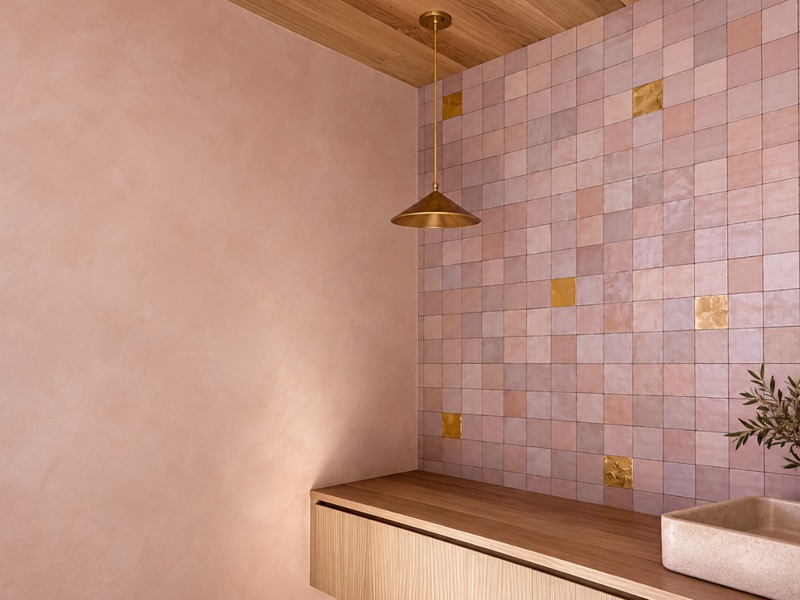
While the finished surface can appear beautifully simple, achieving that simplicity requires skill.
Concretta FS is not a DIY-friendly application, and Meoded recommends professional installation.
Microcement is a system, and the performance and appearance of the finished surface depend on understanding substrate conditions, preparation, application techniques, transitions, layering, finishing, and sealing.
Professional installation becomes particularly important when applying microcement over existing tile in a shower or other wet area.
Showers introduce additional considerations involving the existing substrate, waterproofing system, transitions, penetrations, drainage, and long-term exposure to water. Covering an existing tiled shower should never be approached as simply applying a decorative coating over tile.
The existing installation must first be properly evaluated, and the complete Concretta FS system must be installed according to the requirements of the project.
For these applications, working with an experienced professional helps protect both the beauty and performance of the finished surface unless you are an advanced DIYer.
The rise of microcement does not mean traditional tile is disappearing – and it shouldn’t.
Tile remains one of the most versatile and expressive materials available to interior designers. From handmade zellige and natural stone to porcelain, ceramic, mosaics, and bold decorative patterns, tile can bring extraordinary craftsmanship and personality to a space.
Microcement offers a different opportunity.
Concretta FS creates seamless visual movement, subtle texture, expansive color possibilities, and the distinctive character of a hand-applied finish. Its exceptional adhesion also opens new possibilities for renovation, including transforming suitable existing tile, backsplashes, and countertops without automatically beginning with demolition.
And some of the most compelling interiors use both.
The question is therefore not always microcement vs. tile. It can be how each material contributes to the architecture of the room—and where pattern, texture, continuity, and craftsmanship can work together.
For projects seeking a modern, seamless aesthetic with the character of an artisan-applied finish, Meoded Concretta FS Microcement Plaster offers designers an entirely new surface to work with.
Microcement Kitchen Design – A Mediterranean-Inspired Reveal
Microcement Plaster for Kitchen Renovations: Plaster Over Tile for a Seamless Finish
5 Reasons to Choose Concretta Over Tadelakt
3 Reasons Top Designers Love Meoded Concretta
Limewash – How to Apply: A DIY Guide to a Natural Aesthetic
Suede Revival: Use Meoded Velvet to Create a Luxurious Finish
Moroccan Clay vs Paint: The Organic, Breathable Choice
Q: Is microcement better than tile for a bathroom?
A: Neither material is universally better – the right choice depends on the design, application, budget, and desired aesthetic. Tile offers enormous variety in pattern, shape, material, and style, while microcement creates a more seamless, continuous surface with the subtle movement of a hand-applied finish. Meoded Concretta FS Microcement Plaster is particularly well suited to contemporary, organic modern, Mediterranean, and minimalist bathrooms where a more monolithic architectural look is desired. Microcement and tile can also be used beautifully together rather than treating them as competing materials.
Q: Can you put microcement directly over existing tile?
A: Yes, depending on the condition of the existing surface. Meoded Concretta FS is formulated with superb adhesion and can be applied directly over suitable existing tile and stone without first scuffing or priming the tile. This makes Concretta an exceptional option for no-demolition renovations, including updating dated bathroom tile, kitchen backsplashes, and suitable existing countertops. The existing surface and substrate must be sound and properly evaluated before installation.
Q: Is microcement waterproof, and can it be used instead of tile in a shower?
A: Microcement can be an excellent finish for showers and wet areas, but the complete installation system matters. Microcement should not be treated as a shortcut around proper waterproofing. Meoded Concretta FS can be installed in showers when the substrate and waterproofing are appropriate and the Concretta system is correctly applied and sealed. Because wet-area installations require careful evaluation of the substrate, waterproofing, transitions, penetrations, drainage, and sealing, Meoded recommends professional installation—particularly when applying Concretta over existing shower tile.
Q: Is microcement cheaper than tile?
A: Not necessarily. Microcement is an artisan-applied specialty finish that requires skilled installation, so it should not automatically be considered a less expensive alternative to tile. However, renovation costs are about more than the finish material alone. Because Concretta FS can be applied over suitable existing tile, certain projects may avoid extensive demolition, debris removal, and reconstruction before the new decorative surface is installed. The final cost of either microcement or tile will depend on the project, existing substrate, preparation requirements, material selection, and labor.
Q: Is microcement easier to maintain than tile?
A: Not necessarily, and this is an important distinction. The lack of traditional grout lines gives microcement its clean, continuous appearance, but that does not mean it is inherently easier to maintain than tile. Both surfaces require appropriate cleaning and care. Meoded Concretta FS must also be properly sealed, and the sealer may require periodic renewal depending on the surface, traffic, moisture exposure, and use. The primary advantage of Concretta over tile is its seamless aesthetic, artisan texture, design flexibility, and ability to transform certain existing surfaces—not a promise of maintenance-free performance.
Q: Does microcement crack more easily than tile?
A: A professionally installed microcement system over a sound, stable substrate is designed for long-term performance, but no architectural finish should be described as completely crack-proof. Movement or instability in the underlying substrate can affect a finished surface, whether the material is microcement, tile, stone, or another finish. Proper substrate evaluation and professional application are therefore critical. Meoded Concretta FS combines superb adhesion with a thin, hand-applied finish, but its performance ultimately depends on using the correct system and installation procedures for the specific surface. This is another reason Meoded recommends working with an experienced professional rather than approaching Concretta as a DIY application.
Have more questions about microcement applications, installation, or maintenance? Visit our Microcement Plaster FAQs for additional information about Meoded microcement finishes.