

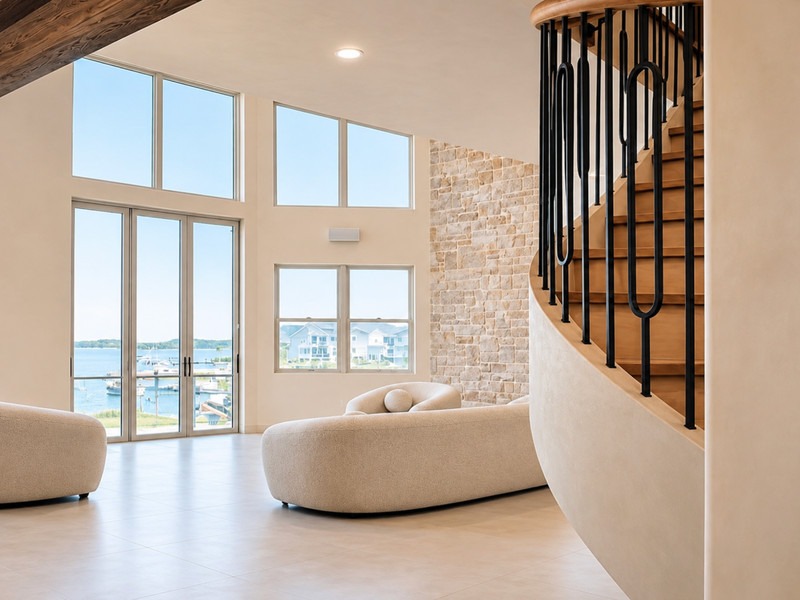
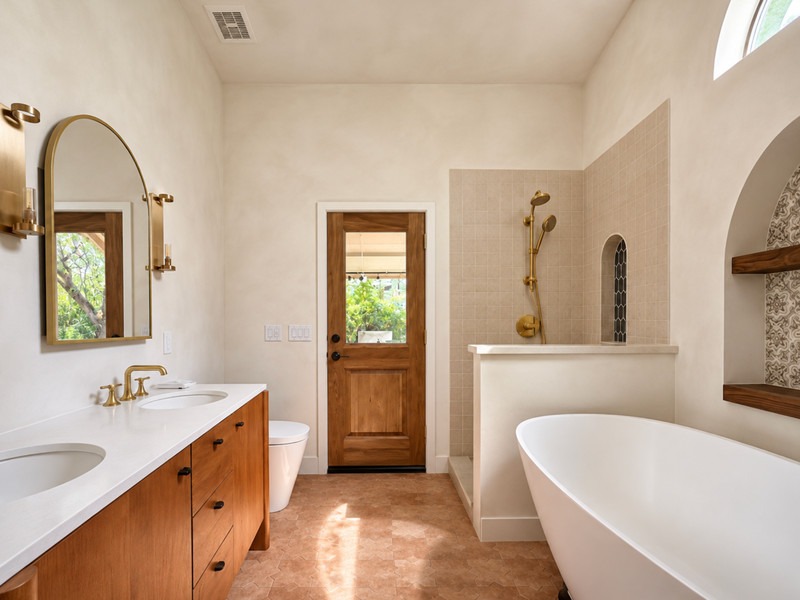
Walk into a room designed with natural finishes and you notice it before you can say why. The walls have a calming texture. The ceiling has depth instead of sitting there flat, and white. Light moves across every surface differently depending on the hour, and the whole space feels nostalgic and almost historic, even if the drywall went up last spring. More often than not, that room is finished in lime plaster or limewash.

The designers creating these spaces have learned a quiet trick: they rarely use just one lime finish. They pair Venetian plaster with limewash, letting the polished, stone-like depth of one play against the soft, cloudy movement of the other. The result is a room that is texture-drenched from floor to ceiling, layered rather than loud, and far more achievable on a real-world budget than a fully plastered interior.
Here is how the two finishes differ, why they belong together, and how to put them to work in your own home.
LimeWash is one of the oldest wall finishes in the world, a mineral paint made from slaked limestone that has coated farmhouses in Provence, villas along the Amalfi Coast and whitewashed villages across Greece for centuries. Rather than forming a plastic film on top of the wall the way conventional paint does, limewash soaks into the surface and cures through a natural process called carbonation, slowly hardening back into a thin skin of limestone.
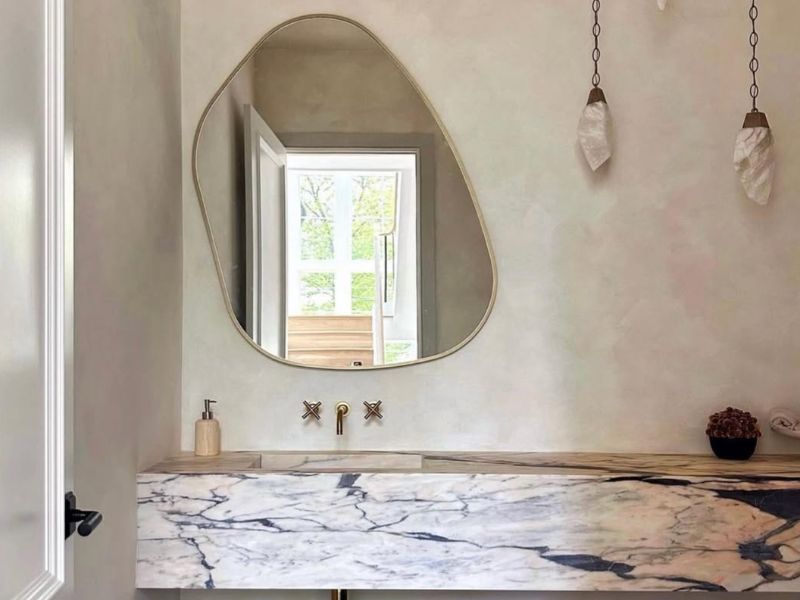
Applied with a wide box brush in loose, crisscrossing strokes, authentic limewashed walls take on a soft, mottled, almost suede-like character. Color pools in some places and lifts in others, creating that cloud-like movement you simply cannot get from a roller and a can of eggshell. Meoded Lime Wash is a zero-VOC, slaked-limestone mineral paint designed for both interior and exterior walls, and it goes on over a dedicated Lime Wash Base Coat that gives the finish an even, absorbent foundation so the color develops evenly.
The pros. Limewash is the most approachable of all the lime finishes, which makes it a natural option for a confident DIYer to start. It is breathable, naturally zero-VOC and naturally resistant to mold, bringing a genuine texture and depth to large surfaces at a fraction of the cost and labor of a troweled plaster. A gallon of Meoded Lime Wash covers roughly 250 to 350 square feet for two coats, depending on the porosity of the wall, which is precisely why it shines on ceilings and expansive walls. It also ages beautifully, softening and patinating over time rather than chipping and peeling.

The cons. Limewash is absorbent and not washable the way an acrylic paint is. It is not recommended for extremely wet and high traffic areas such as around a kitchen sink or the backsplash behind a stove. The finish is also intentionally variable, so anyone who wants a perfectly uniform color will find it busy. Application takes a little technique: you need to keep a wet edge, work in the right temperature range and give the first coat time to dry before the second.
Venetian plaster is a lime plaster applied with a steel trowel in multiple thin layers, then compressed and burnished until the surface takes on the depth and coolness of polished stone. It is the finish of Renaissance era architexture, and more recently, of some of the most photographed kitchens and powder rooms in the world. Where limewash reads as soft and atmospheric, Venetian plaster reads as architectural, solid and luxurious.
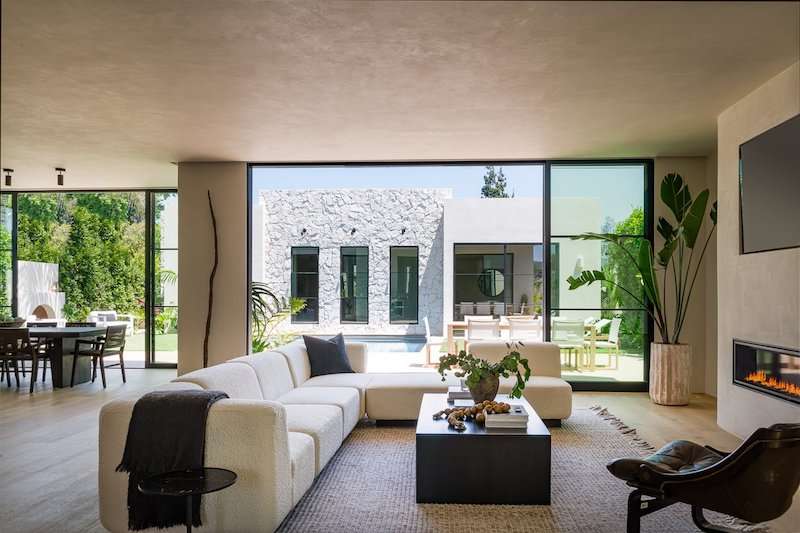
Meoded thoughtfully manufactures a range of the highest quality lime and Venetian plasters from Marmorino Tintoretto, a modern day “matte Venetian”, Stucco Lamundo, a traditional polished, glossy Venetian, to Palladino which lies somewhere between and can be easily burnished into a stone-like finish.
The pros. Venetian plaster is extraordinarily durable once cured, and when sealed with HydroWax it handles real life far better than limewash, which makes it the right choice for high-touch surfaces like range hoods, fireplace surrounds, entry walls and powder rooms. It is breathable, zero-VOC, and it offers a range of looks from flat matte stone to mirror-like polish. Nothing else delivers quite the same sense of permanence and craft.
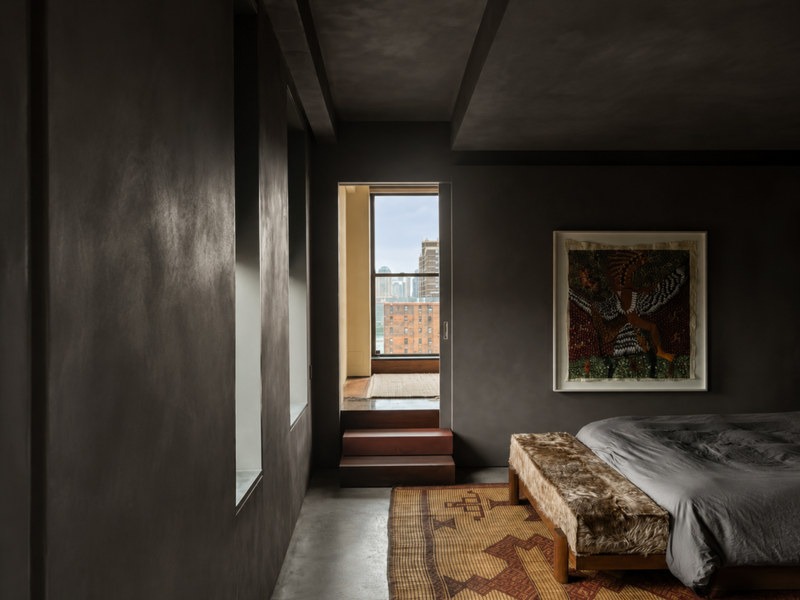
The cons. Venetian plaster is more labor-intensive and more costly than limewash. It requires a special mineral primer, for Meoded plasters that would be Quartz Primer, several troweled coats, and a practiced hand to burnish well, so many homeowners hire a skilled applicator for larger areas. Covering every wall and ceiling of a room in troweled plaster adds up quickly in both materials and labor, and ceilings in particular are physically demanding to trowel.
That last point is exactly where the pairing becomes so compelling. When you reserve Venetian plaster for the surface that deserves the spotlight and finish the remaining walls and ceiling in limewash, you get a room that feels completely enveloped in texture without paying plaster prices for every square foot.
The two finishes also simply look right together. Both are made from lime, both dry with a similar mineral finish, and both carry that subtle, hand-applied movement that tells the eye this room was handcrafted with natural elements. The difference in their surfaces, one compressed and stone-like, the other open and cloudy, creates a quiet contrast that adds depth and drama without ever feeling busy.
The hood is the natural focal point of a kitchen, and a sculpted range hood finished in Marmorino Tintoretto or polished Stucco Lamundo, sealed with Hydrowax, turns it into something closer to a piece of sculpture than an appliance cover.

Then let the upper walls and the ceiling disappear into a cloud of limewash in a coordinating tone. A limewashed kitchen ceiling is one of the most effective ways to make a kitchen feel finished and intentional, because it draws the eye up and wraps the whole room in the same soft mineral texture. Keep the limewash on the walls and ceiling areas away from the sink and cooktop splash zones, and let the plaster handle anything that will see water, grease or scrubbing.
In a living room, dining room or bedroom, choose a single wall or the ceiling to carry the weight of the design. The wall behind a bed, a drywall fireplace or the long wall of a dining room all make beautiful candidates. Trowel those walls in Venetian plaster, polished to a soft sheen or left in a matte Marmorino, and finish the remaining walls and the ceiling in limewash. The accent wall gives the room its anchor, while the limewash delivers a continuous, enveloping texture that makes the space feel like a single, cohesive composition rather than a feature wall surrounded by flat paint.

Even if you plaster all four walls, consider giving the ceiling a limewash. It is far easier and more economical to brush on overhead than a troweled plaster, and a color-matched or slightly deeper limewashed ceiling adds the final layer of depth and drama that completes a texture-drenched room. In a powder room plastered in a deep, glossy Stucco Lamundo, for instance, a limewashed ceiling in the same family of color makes the whole space feel like a jewel box carved from a single stone.
You may also like to read “Venetian Plaster Ceilings: Rethinking the 5th Wall”
Meoded Paint and Plaster offers 88 curated colors, a palette developed to translate beautifully across lime-based finishes, from warm plasters and sun-bleached neutrals to moody, saturated tones.
For anyone who wants something a little more dramatic, the new MOBWASH Lime Wash collection, created in collaboration with Tonester Paints, adds six deeply moody shades and two earthy neutrals, available online through Meoded and Tonester.
The real freedom, though, is that every Meoded product can be custom tinted. That means you are never limited to whatever happens to exist in both a plaster and a limewash. You can match a Venetian plaster hood and a limewashed ceiling to the exact same color for a seamless, fully color-drenched room, or tint them a shade or two apart so the plaster reads slightly deeper and the limewash slightly lighter, a tonal layering that adds even more dimension. Because both finishes dry lighter than they look wet, always test a sample board and let it dry fully before committing.

Color drenching, the practice of wrapping walls, ceiling and trim in a single hue, has become one of the defining interior moves of the moment. Pairing Venetian plaster and limewash in coordinating custom colors takes that idea a step further, so that the room is drenched not just in color but in texture.
The reason these two finishes sit together so naturally comes down to what they are made of. Both limewash and Venetian plaster begin with lime, the same mineral that has bound walls together since ancient times. Limewash is lime in paint form, a thin mineral wash that soaks into the surface.
Venetian plaster takes that lime and adds marble dust, which gives it body, strength and the ability to be troweled, compressed and polished. That marble is where the name Marmorino comes from. In Italian, marmo means marble, and marmorino translates loosely as “little marble” or “baby marble,” a lovely description of a material that, once burnished, looks and feels like a thin layer of stone.
The marble dust is also what allows Venetian plaster to travel across such a wide range of finishes. Left matte, a Marmorino like Tintoretto has the same quiet, chalky softness as limewash, which is exactly why the two pair so seamlessly. Troweled and burnished to a high polish, like Stucco Lamundo, it takes on the glossy, luminous depth that most people picture when they hear the word Venetian. Same family, same mineral roots, two entirely different moods, and that range is the secret to designing a room that feels layered, intentional and timeless.
Additional Resources
Venetian Plaster Ceilings: Rethinking the 5th Wall
Q: Can I use Venetian plaster and limewash in the same room?
A: Absolutely, and it is one of the most effective ways to create a fully textured room. Because both Meoded Venetian plasters and Meoded Lime Wash are lime-based, they share the same mineral softness and pair naturally. Use plaster such as Marmorino Tintoretto or Stucco Lamundo on focal points and high-touch surfaces, and Meoded Lime Wash on the remaining walls and ceiling.
Q: What is the difference between limewash and lime plaster?
A: Limewash is a thin mineral paint made from slaked limestone that is brushed on for a soft, cloudy finish. Lime plaster, including Venetian plaster and Marmorino, is a thicker material made with lime and marble dust that is troweled on in layers and can be burnished from matte to high gloss. Meoded makes both, so you can coordinate them in the same color.
Q: Is Marmorino the same as Venetian plaster?
A: Marmorino is a type of Venetian plaster. The name comes from the Italian word for marble, a nod to the marble dust in the mix. Meoded Marmorino Tintoretto offers a matte to low-sheen Venetian plaster finish, while Marmorino Palladino uses a larger aggregate for bolder stone textures.
Q: Can I use limewash in a kitchen?
A: Yes, on the right surfaces. Meoded Lime Wash is absorbent and not washable, so it is not recommended for wet zones like the area around the sink or the backsplash behind the range. It is beautiful on kitchen ceilings and on walls away from splashes. For hoods and backsplash areas, choose a Meoded Venetian plaster sealed with Hydrowax.
Q: Can I match my Venetian plaster and limewash colors exactly?
A: Yes. Meoded offers 88 curated colors, and every product can be custom tinted, so your plaster and limewash can be matched to the same shade for a seamless color-drenched look or tinted a step apart for tonal layering. Always let a sample dry fully, since both finishes dry lighter.
Q: Do I need a primer for limewash and Venetian plaster?
A: Yes, and each finish has its own. Meoded Lime Wash goes over Meoded Lime Wash Base Coat for even absorption and color development, while Meoded Venetian plasters go over Meoded Quartz Primer, which gives the trowel a gripping surface for dependable adhesion.
Q: How do I make Venetian plaster glossy?
A: Gloss comes from the plaster itself and the burnishing. Meoded Stucco Lamundo is formulated for a polished, marble-like sheen, and a final coat of Meoded Hydrowax deepens the color and adds a protective luster.
Q: Are Meoded’s lime finishes eco-friendly?
A: Meoded Lime Wash and Meoded’s lime-based Venetian plasters are zero-VOC, breathable, natural mineral finishes made in the USA in Los Angeles, which makes them a healthy choice for kitchens, bedrooms and nurseries alike.