

| Weight | N/A |
|---|---|
| Dimensions | N/A |
| Size | Quart, Gallon, 4 Gallon |
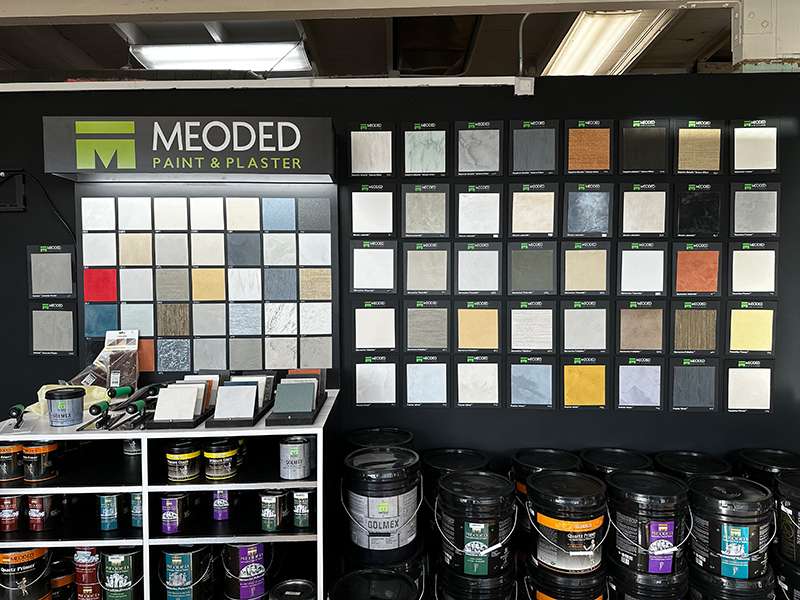
| Meoded Colors | MC-701 Natural White, MC-703 Kasper, MC-706 White Dove, MC-709 Pure White, MC-711 Designer White, MC-715 Calm White, MC-718 Creative White, MC-721 Cumulous, MC-725 Latte, MC-728 Creamer, MC-730 Origata, MC-732 Mint, MC-735 Bliss, MC-737 Letter, MC-740 Zen, MC-743 Graystone, MC-746 Clarity, MC-749 Tip-Taupe, MC-751 Villa, MC-753 Light Coffee, MC-756 Swiss Coffee, MC-758 Sandstorm, MC-760 Antique, MC-762 Faye, MC-765 Constellation, MC-767 Dolce, MC-769 Peach, MC-771 Slate, MC-774 Cafe, MC-777 Mountain Fog, MC-779 Stone, MC-781 Strokes of Taupe, MC-783 Overcast, MC-786 Canvas, MC-789 Recital, MC-791 Solitude, MC-793 Fossil, MC-796 Walkway, MC-799 Rocky, MC-801 Tarnished Silver, MC-804 Lounge, MC-807 Concrete, MC-809 Fairground, MC-812 Balboa Gray, MC-814 Shaded, MC-816 Bound, MC-819 Dusk, MC-821 Structure, MC-824 Damask, MC-826 Dark Denim, MC-829 Bayou, MC-831 Deep Teal, MC-834 Marlboro Blue, MC-836 Pistachio, MC-838 Sage, MC-840 Morning Dew, MC-843 Olive, MC-845 Rose, MC-847 Ballerina, MC-850 Flow, MC-852 Violet Essence, MC-854 Presto, MC-857 Sunny Day, MC-859 Medallion, MC-862 Deep Gold, MC-864 Flowerpot, MC-866 Pottery, MC-869 Ombia, MC-871 Canal, MC-873 Ruby Red, MC-875 Brickyard, MC-877 Red Wine, MC-880 Mauve Brown, MC-883 Cocoa, MC-885 Charcoal, MC-888 Obsidian, MC-890 Granite, MC-893 Dark Knight, MC-896 Deep Sea, MC-899 M-Black |
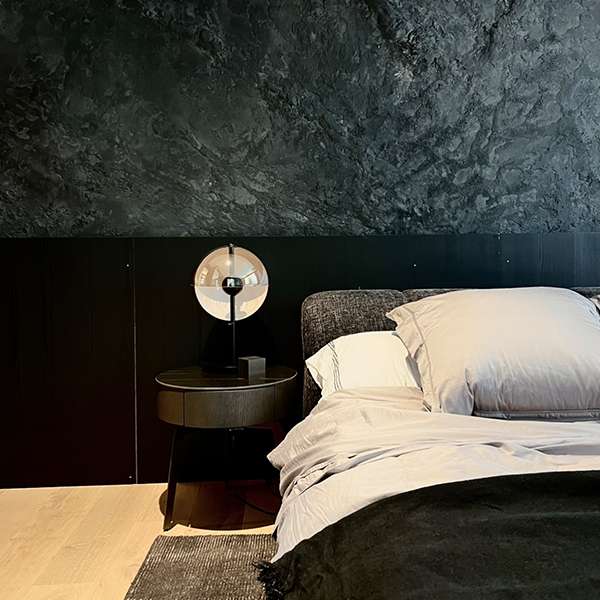
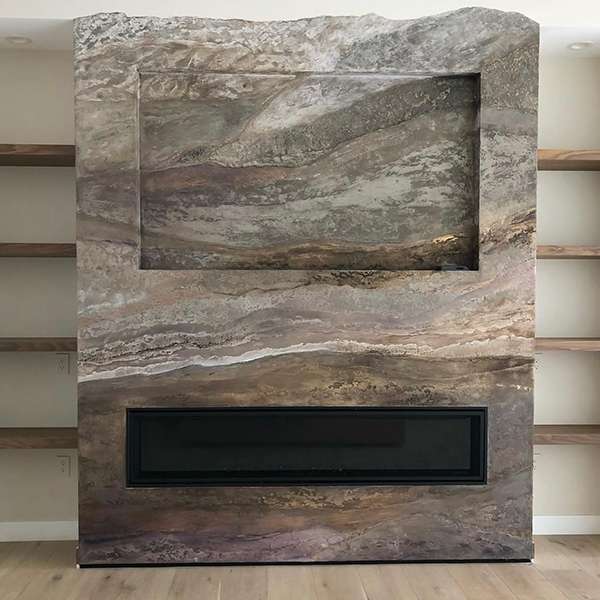
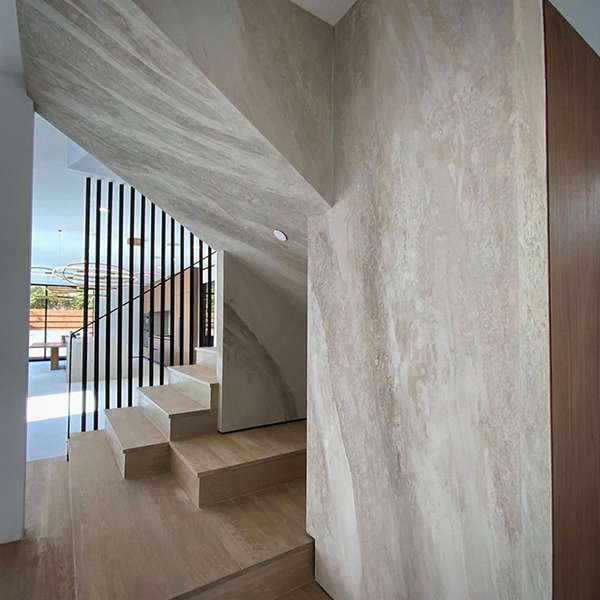
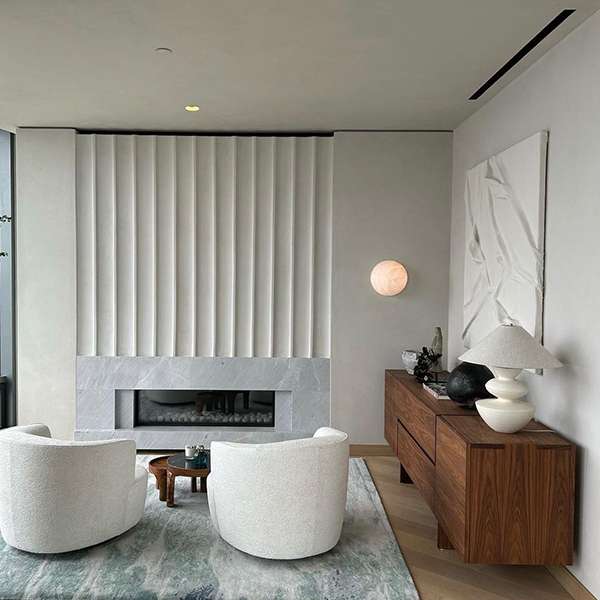
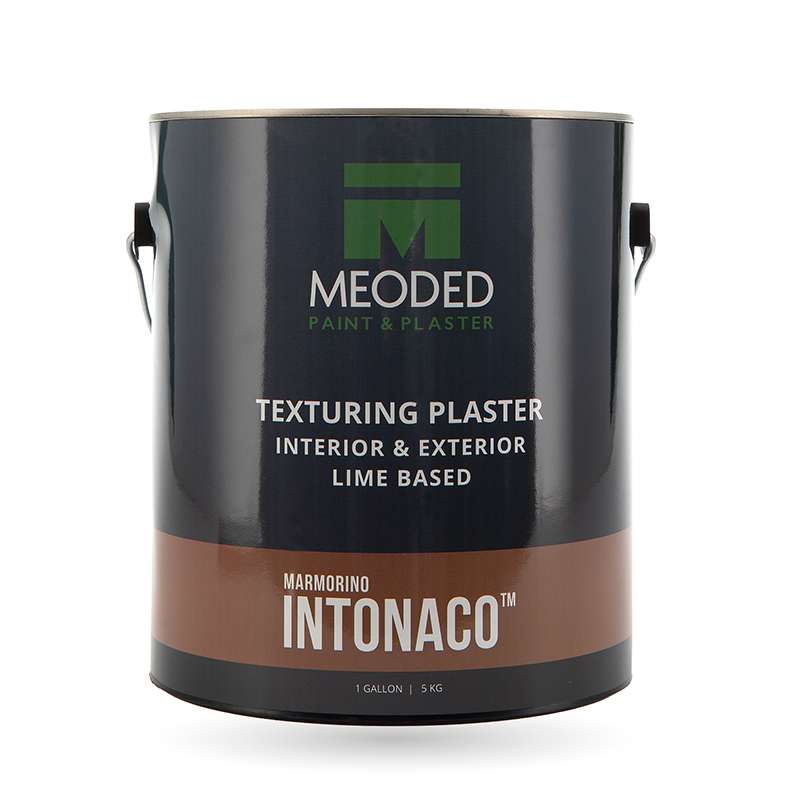
Marmorino Intonaco is a genuine lime-based stone effect plaster, suitable for interior and exterior surfaces. Intonaco’s medium size grain forms a thicker body which allows the creation of heavy textures. A wide range of textures can be achieved with Intonaco including smooth with minimal movement, rough textures, natural stone looks, and fluted finishes.
1KG Quart – covers approximately 3-7 sq ft for 2 coat application.
5KG Gallon – covers approximately 15-35 sq ft for 2 coat application.
20KG Bucket – covers approximately 60-140 sq ft for 2 coat application.
Coverage depends on surface porosity and texture.
Preparation – Surface should be smooth, clean and dust free. It is recommended to apply over a level 4-5 wall.
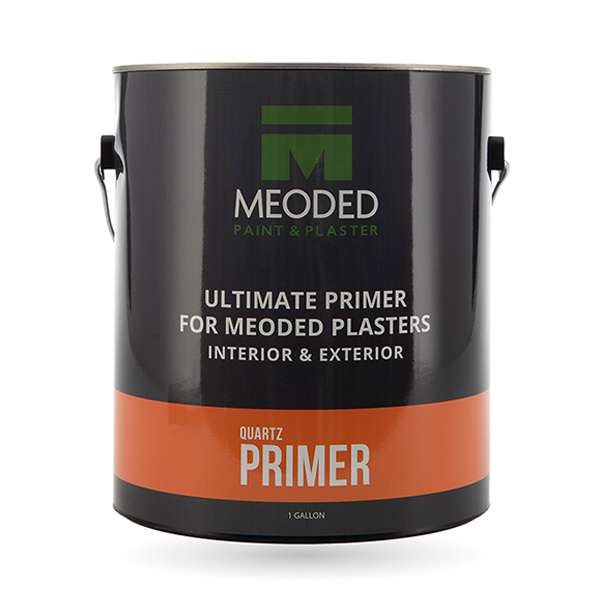
New Surface – Surface should be smooth, clean and dust free. Prime the substrate with the recommended water based primer as required; such as a PVA primer for new drywall, multi-purpose primer for wood or glossy surfaces, and let it dry fully. Next apply one coat of Meoded Quartz Primer allowing it at least 3-5 hours to dry.
Existing Surface – Any surface with sheen should be sanded, dust free, and then primed with a water based multi-purpose primer letting it dry fully. Next apply one coat of Quartz Primer allowing it at least 3-5 hours to dry. Preparation of flat surfaces require only the application of Quartz Primer.
Exterior Brown Coat – First, the surface should be pressure washed and cleaned. When the surface is fully dry, apply Quartz Primer diluted with up to 25% water. Let it dry for at least 3-5 hours. Over the brown coat, it is recommended to apply three thin coats of Intonaco to get a smooth surface.
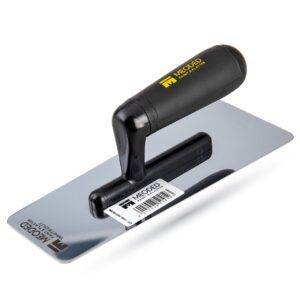
Application – Use a stainless steel rounded edge trowel or spatula to apply two coats of Intonaco. If applying light colors, it is recommended to use Meoded’s Whiteout Trowel to avoid formation of dark trowel marks.
First Coat – Intonaco should be applied thinly and evenly, covering the entire wall. it is recommended to use a damp sponge in a circular motion before Intonaco dries to create a more uniform design, expose the aggregate, and eliminate all imperfections. Allow at least 12 hours for the first coat to dry.
Second Coat (Smooth Finish) – Apply the second coat in the same manner as the first coat, but this time apply it a bit thicker. Spread the material evenly maintaining the same thickness across the wall. For a smooth finish, smooth the wall with the trowel applying minimal pressure and cleaning off all excess material. Then, let the plaster dry for a minimum of 12 hours. Next, smooth the wall by sanding the surface with 150 grit sandpaper and following with 300+ grit.
Second Coat (Heavy Textures) – Intonaco’s medium size grain allows for the creation of heavy textures such as flutes and distressed finishes. It is recommended to build heavy textures by applying multiple thin coats rather than thick coats to avoid cracking.
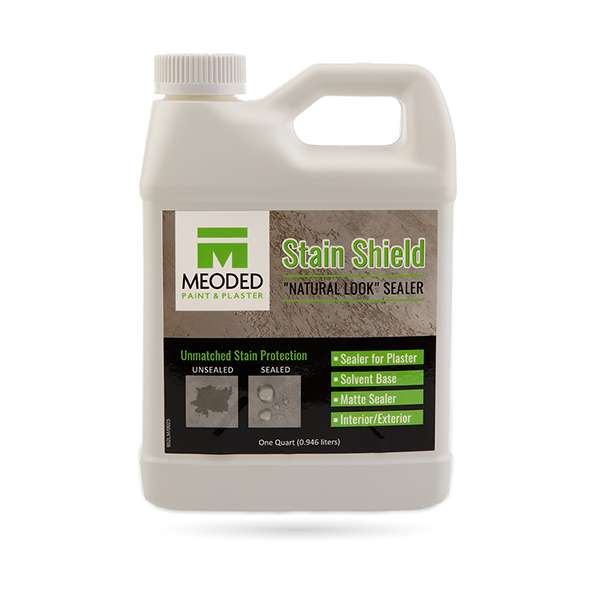
Sealer – After a minimum of 48 hours of dry time, it is recommended to protect the finish with Stain Shield natural look sealer to provide the finish with protection from moisture and dirt, while not adding sheen or changing the color.
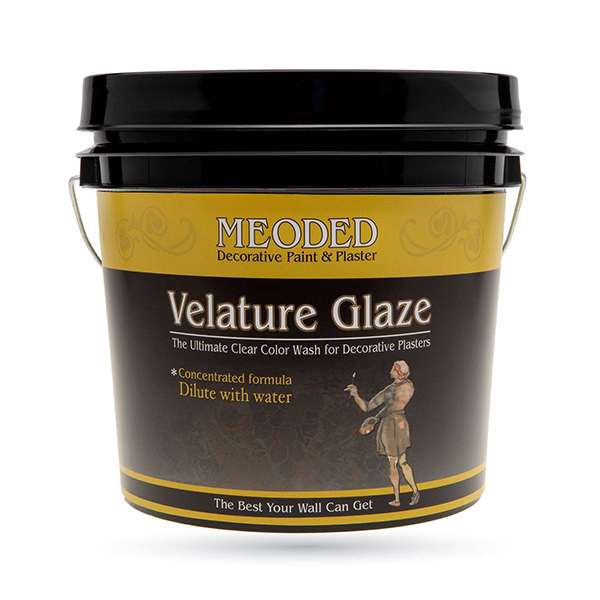
Veleature Glaze (Color Wash) – Veletaure is a concentrated glaze that is made to penetrate into plasters giving it a multi-color effect. Always remember that plaster absorbs quickly and that you can always darken the color if needed. Dilute the first coat of Velature with at least 800%-1,000% water (1 part glaze to 8-10 parts water). Using a sponge, “wash” the wall with a light thin layer, letting the wall to “soak” the glaze, and seal up the plaster so that you can work with a second, darker, coat.
Check out our Dealer Directory to view your nearest distributor.
Save 10% on your order and a shipping fee by going to your nearest dealer.
&nbs”;
Orders typically ship in 1-2 business days. Shipping charges and transit times vary depending on your zip code and order weight.
Click here to view our Marmorino Intonaco Gallery.
What tools are needed to create textured, fluted, or raked plaster finishes?
Textured, fluted, and raked plaster finishes are created with different tools depending on the desired design. Fluted plaster finishes can be created with Meoded fluting tools, while raked plaster finishes can be created with Meoded raking tools to form clean linear grooves and dimensional texture in wet plaster.
Other textured lime plaster finishes can be created using plaster trowels and specialty tools, spatulas, texturing rigattos, notched trowels, decorative rollers, brushes, and other texture tools. Meoded Marmorino Intonaco has a heavier body, making it ideal for dimensional finishes such as fluted walls, raked plaster, carved textures, rough stone effects, and custom textured plaster designs.
What is raked plaster, and how is it different from fluted plaster?
Raked plaster and fluted plaster are both architectural textured plaster finishes that can be created with Marmorino Intonaco, but they use different tools and create different visual effects. Fluted plaster is created with fluting tools that form consistent concave or convex grooves, giving the wall a clean, repeated architectural pattern.
Raked plaster is created with raking tools that pull through the wet plaster to create linear, multidimensional texture. The lines can alternate in size, with wider and thinner grooves repeating throughout the pattern. Compared to fluted plaster, raked plaster usually has a slightly rougher and more organic appearance.
Can Marmorino Intonaco plaster be sealed without losing the natural texture?
Yes. Marmorino Intonaco can be sealed without losing its natural texture when the proper sealer is used. Meoded Stain Shield is a penetrating sealer that absorbs into the finish rather than sitting on top and creating a heavy film.
This helps protect the textured lime plaster while maintaining its natural appearance without significantly changing the color, sheen, or texture of the finish. It is a good option for fluted, raked, carved, or heavily textured plaster surfaces where added protection is desired while preserving the organic look of the plaster.
When should I choose Marmorino Intonaco instead of a thinner Marmorino plaster?
Choose Marmorino Intonaco when the project calls for a heavier lime plaster texture, pullout texture, fluted plaster, raked plaster, carved effects, or more dimensional wall movement. Intonaco has a thicker body than finer Marmorino plasters, making it better suited for bold, textured plaster finishes.
For smooth Marmorino plaster finishes or subtle, minimally textured looks, a thinner Marmorino plaster is usually the better choice. It applies in finer layers, provides greater coverage, and is more practical when the project does not require a heavy plaster build or deep texture. Marmorino Intonaco is best used when the design requires a heavier plaster build and more pronounced architectural texture.
How thick can textured lime plaster be applied?
Textured lime plaster can be applied thicker than Venetian or fine Marmorino plasters, but it should not be applied too thick in a single coat, as this can increase the risk of cracking. For heavier textures, it is best to build the finish gradually with multiple coats.
Marmorino Intonaco can be applied up to approximately 1/8″ thick per coat, depending on the texture and design being created. Fluted plaster, raked plaster, pullout textures, carved effects, and rough stone finishes may require more material built through multiple coats. Creating a sample first is recommended to confirm the final texture, thickness, and coverage.
Does textured lime plaster need a perfectly smooth wall before application?
No. Textured lime plaster does not need a perfectly smooth wall before application. A Level 4 wall finish will typically suffice because the plaster has enough body to create depth, movement, and dimensional texture.
However, cracks, holes, loose material, heavy existing texture, or major wall damage should still be repaired before applying the plaster. Proper surface preparation helps create a more consistent and durable textured plaster finish.
How much Marmorino plaster do I need for a textured plaster wall?
The amount of Marmorino plaster needed for a textured plaster wall depends on the texture being created, the thickness of the application, and the condition of the surface. Heavier textures require more material and provide less coverage, while lighter textures generally cover more square footage.
For the most accurate estimate, create a sample of the exact texture using the container size you plan to purchase, such as a 1KG quart or 5KG gallon, and measure how many square feet that amount covers. This will help estimate how much Marmorino Intonaco is needed for the full project based on the total square footage and texture being applied.
What is the best lime plaster for creating textured walls?
The best lime plaster for creating textured walls is a thicker plaster formulated with a larger limestone aggregate and enough body to hold depth, movement, and dimensional texture. These heavier lime plasters are well suited for pullout textures, fluted plaster, raked plaster, carved effects, and rough stone-inspired finishes.
Meoded Marmorino Intonaco is designed for bold textured lime plaster walls because it has more body than thinner Marmorino or Venetian plasters. It can be shaped with trowels, fluting tools, raking tools, and other specialty tools to create natural depth, shadow, movement, and architectural wall texture.